
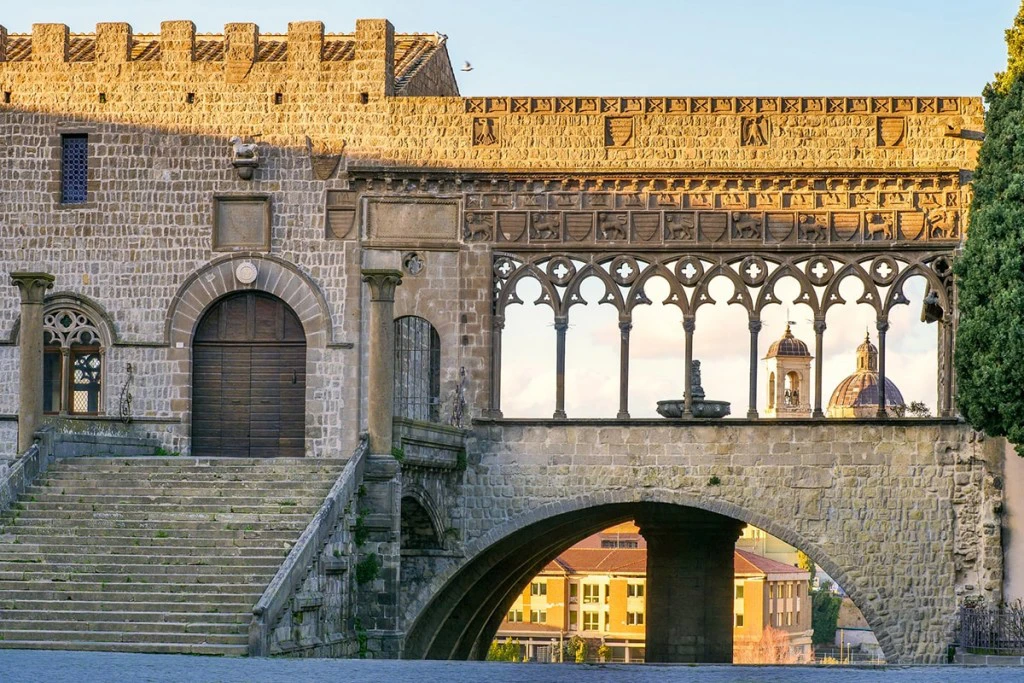
The San Pellegrino district of Viterbo is one of the largest medieval neighborhoods in Europe. It is the symbol of the ancient medieval city of Viterbo.
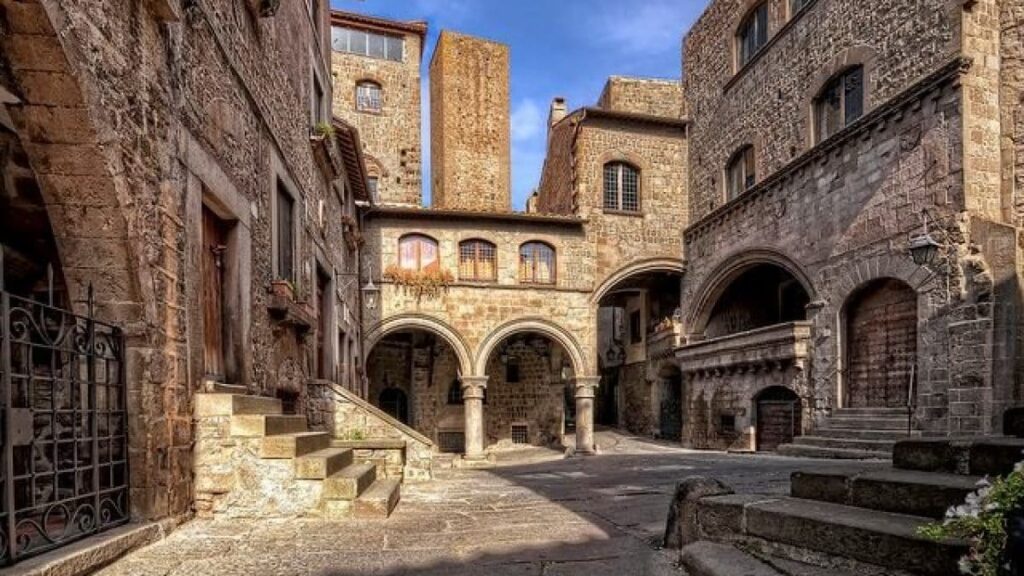
Towers, alleys, arches, small squares, winding streets, and the characteristic profferli, or external stairways. The San Pellegrino district of Viterbo is one of the largest medieval neighborhoods in Europe. It is the symbol of the ancient medieval city of Viterbo, known as the City of Popes, since in the 13th century it was the seat of the papacy and the Papal Palace hosted several popes. The city’s medieval quarter is a typical example of 13th-century architecture, with towers, arches, alleys, and the aforementioned typical Viterbo profferli. Overlooking Piazza San Pellegrino are the 13th-century Palazzo degli Alessandri, the Scacciaricci Tower, and the ancient church of San Pellegrino, dating back to the 11th century. The church was rebuilt in 1889 and, damaged by bombing in 1944, reopened for worship in 1951.
Viterbo enjoyed its period of greatest prosperity thanks to the presence of the popes, who settled here in the second half of the 13th century to escape the dangers of nearby Rome. Evidence of the medieval and Renaissance periods can be found in every square and alley of the sprawling historic center. Viterbo is also known for its abundance of water and its many fountains.
The city of Viterbo boasts a jewel of a neighborhood that has preserved intact its medieval civic architecture: the San Pellegrino neighborhood. Strolling through its narrow streets is a true journey back in time.
A visit to the Palazzo dei Papi, where the pontiffs resided for approximately 23 years, is a must. The nearby Colle del Duomo museum houses many masterpieces of medieval and Renaissance painting.
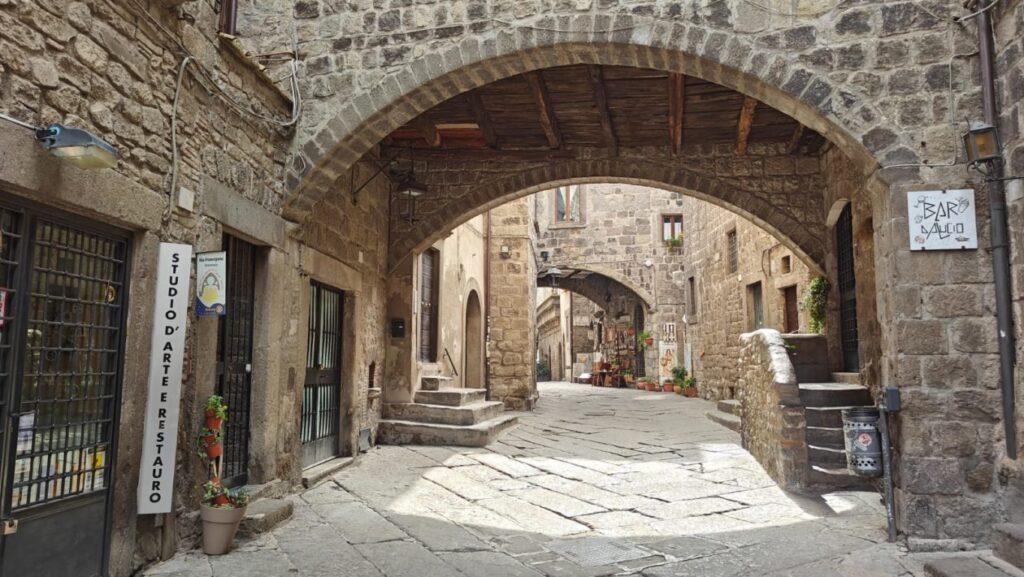
Palace of the Popes
The itinerary continues through narrow alleys to Piazza San Lorenzo, the oldest inhabited area of Viterbo, where you can admire the spectacular Palace of the Popes. The expansion of the old Bishop’s Palace was promoted by the Captain of the People Raniero Gatti on the occasion of the transfer of the seat of the Papal Curia in 1257, commissioned by Pope Alexander IV. Raniero Gatti also built a large audience hall, now known as the “Conclave Hall” for hosting the first and longest conclave in history. Another characteristic part of the Palace of the Popes is the Loggia delle Benedizioni (better known as the Loggia dei Papi), built in 1267: the Pope looked out from here as he exited the Conclave Hall.
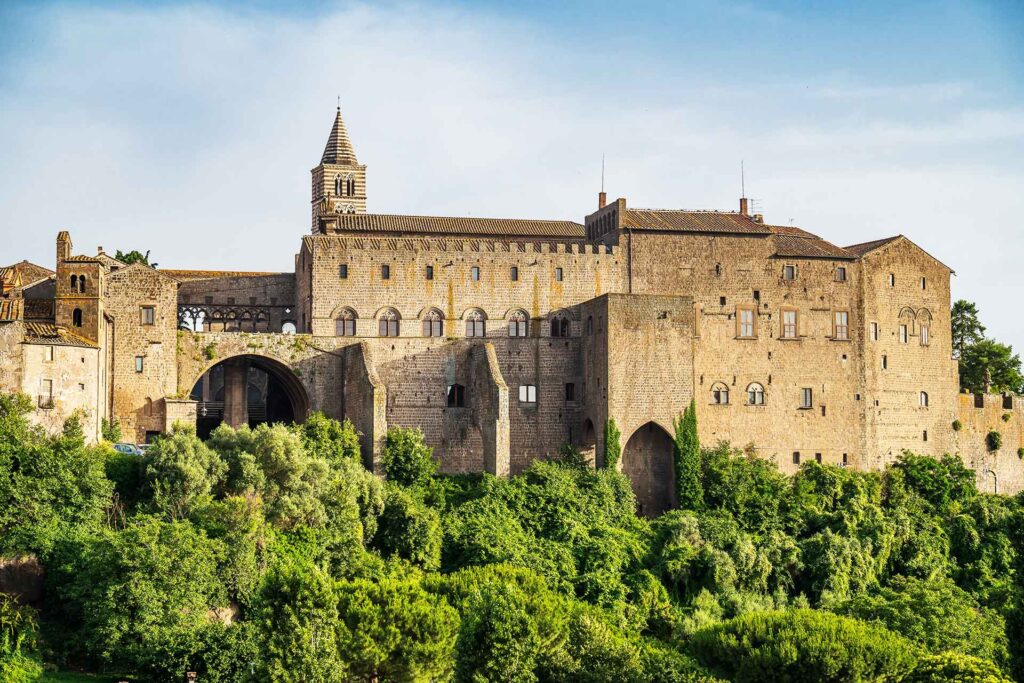
Cathedral of San Lorenzo
The church stands on the Cathedral Hill, believed to be the oldest inhabited nucleus of the city of Viterbo, inhabited since Etruscan times. Eloquent evidence of this are some archaic stones from an ancient pagus at the entrance to Piazza San Lorenzo, where today stand the most iconic buildings, such as the Palazzo dei Papi, the house of Valentino della Pagnotta, and the Cathedral itself. The history of Viterbo Cathedral begins in 1192, when Celestine III elevated Viterbo to the papal seat. The previous parish church was replaced by a building of clearly Roman inspiration, completed in the early 13th century. The current building has undergone significant alterations: the bell tower was rebuilt in 1369 and the façade was replaced in 1568. Between the 19th and 20th centuries, restorations restored the original appearance, at least inside.
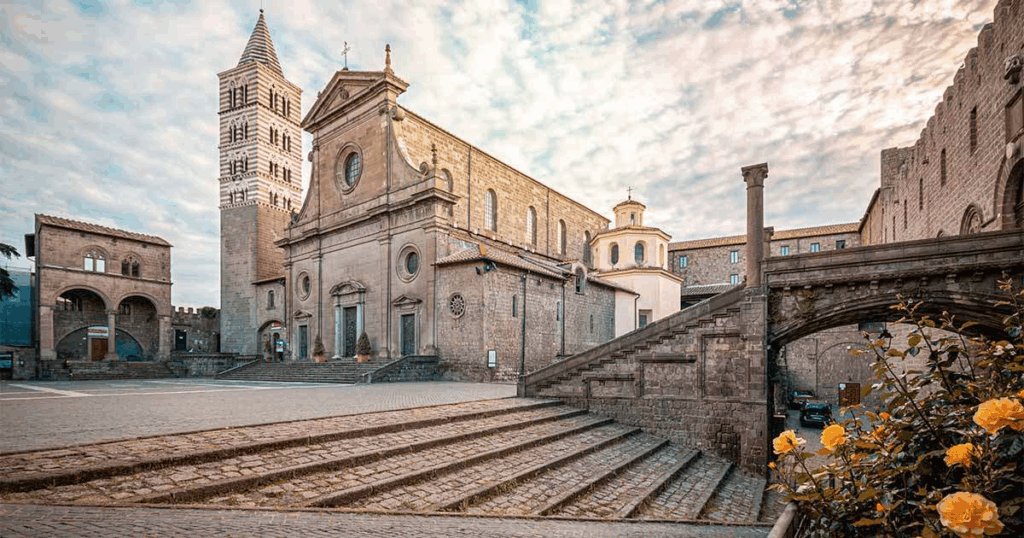
Medieval Quarter of San Pellegrino
Along the way, we’ll encounter the typical spindle fountains. Viterbo has been known since Roman times for its abundant water supply. We’ll reach the San Pellegrino neighborhood, a jewel of medieval architecture with the characteristic external staircases of the houses called “profferlo,” the imposing tower houses, the courtyards known in the local dialect as “richiastri,” and the Palazzo della Alessandri family palace, built in the mid-13th century.
Museum of the Porters’ Association of Santa Rosa
Located in the medieval district of San Pellegrino, the Museum of the Porters’ Association of Santa Rosa is housed in a space donated by the Municipality of Viterbo in 1978. Inside, visitors can retrace the history of Viterbo’s greatest tradition: the transport of the Macchina di Santa Rosa, a bell-tower-like structure 28 meters high and weighing an average of 5 tons. Every September 3rd at 9:00 PM, it is carried on the shoulders of more than one hundred men through the city streets in honor of Saint Rosa of Viterbo. The three-level structure houses, on the ground floor, a reproduction of the first wooden canopy, built in 1690, of which a drawing is preserved, as well as nine scale models of the machines transported from 1924 to the present day. Also on display are copies of the drawings of the machines transported during the 19th century, the originals of which are preserved at the Civic Museum.
For more information and guide https://annaritaproperzi.it/ tel +393334912669